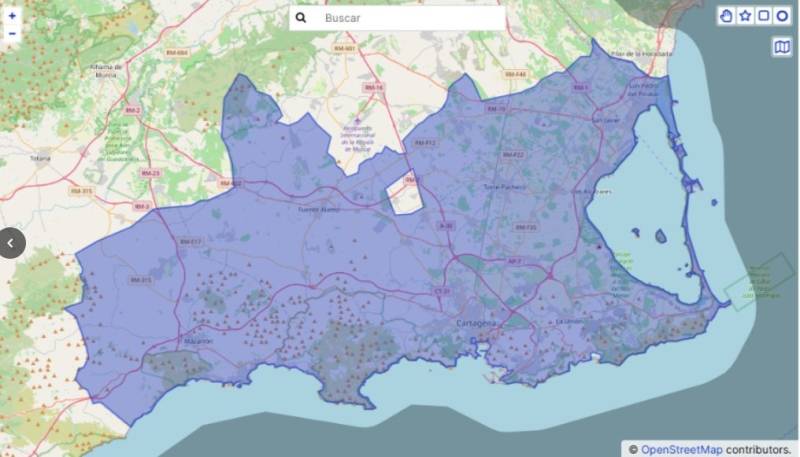
To be listed on the CAMPOSOL TODAY MAP please call +34 968 018 268.
Guidelines for submitting articles to Condado Today
Hello, and thank you for choosing CondadoToday.com to publicise your organisation’s info or event.
Condado Today is a website set up by Murcia Today specifically for residents of the urbanisation in Southwest Murcia, providing news and information on what’s happening in the local area, which is the largest English-speaking expat area in the Region of Murcia.
When submitting text to be included on Condado Today, please abide by the following guidelines so we can upload your article as swiftly as possible:
Send an email to editor@condadotoday.com or contact@murciatoday.com
Attach the information in a Word Document or Google Doc
Include all relevant points, including:
Who is the organisation running the event?
Where is it happening?
When?
How much does it cost?
Is it necessary to book beforehand, or can people just show up on the day?
…but try not to exceed 300 words
Also attach a photo to illustrate your article, no more than 100kb
PROPERTY SEARCH
PROPERTY SEARCH
article_detail
Date Published: 18/09/2026
New EU rules could ban social media accounts for children under 13
The proposed rules would introduce parental controls, private profiles and limits on addictive features such as endless scrolling
Children across the European Union could face major new restrictions on social media, gaming platforms and artificial intelligence under plans unveiled by Brussels.
The European Commission has formally proposed its EU KIDS Act, a new set of rules designed to give children more gradual access to the online world while forcing technology companies to take greater responsibility for their safety.
The proposal would set 15 as the minimum age for children to open their own social media accounts anywhere in the EU.
Under the planned system, children under 13 would not be allowed to have social media accounts at all. They could still access specially designed child-friendly video services through an account belonging to a parent or guardian, with the parent remaining in control.
From the age of 15, young people would be able to create and manage their own accounts, although platforms would still have to provide stronger safety protections for anyone under 18.
The Commission says the aim is to create a gradual move into social media rather than allowing children unrestricted access from a young age.
European Commission President Ursula von der Leyen described the situation as a huge battle for children's attention, arguing that technology companies have created services designed to keep people online for as long as possible.
Under the proposed rules, platforms would have to remove or restrict features considered particularly likely to encourage excessive use. That includes infinite scrolling, reward mechanisms and push notifications during sleeping hours.
Children would also be protected from unwanted contact from strangers, while their profiles would have to be private by default. Platforms would have to provide simple ways for young users to block or mute other people and certain features, including livestreaming, would be restricted.
AI chatbots and so-called AI companions would have to be switched off by default for children. They would also be prohibited from behaving in ways that could encourage emotional dependency.
The Commission is also proposing tougher age-verification requirements. Social media and video-sharing platforms would have to check a user's age when a new account is created, using systems designed to protect personal information.
One of the biggest changes would be a reversal of the "burden of proof". Rather than expecting parents and children to work out whether an online service is safe, large platforms would have to demonstrate that their services meet the new requirements.
Ms Von der Leyen said the proposed law would put parents back in control while requiring platforms to show that their services are safe by design.
Spain is among the countries considering tighter age restrictions, while France, Italy, Poland, Greece and other countries have also been developing their own measures. The Commission says a single EU-wide system would avoid a patchwork of different national rules, where children could face different restrictions depending on where they live.
However, the KIDS Act is not yet law.
The European Commission adopted the proposal on September 17 and it must now go through the EU legislative process, including consideration by the European Parliament and the Council of the EU. The final rules could therefore change before they are adopted.