












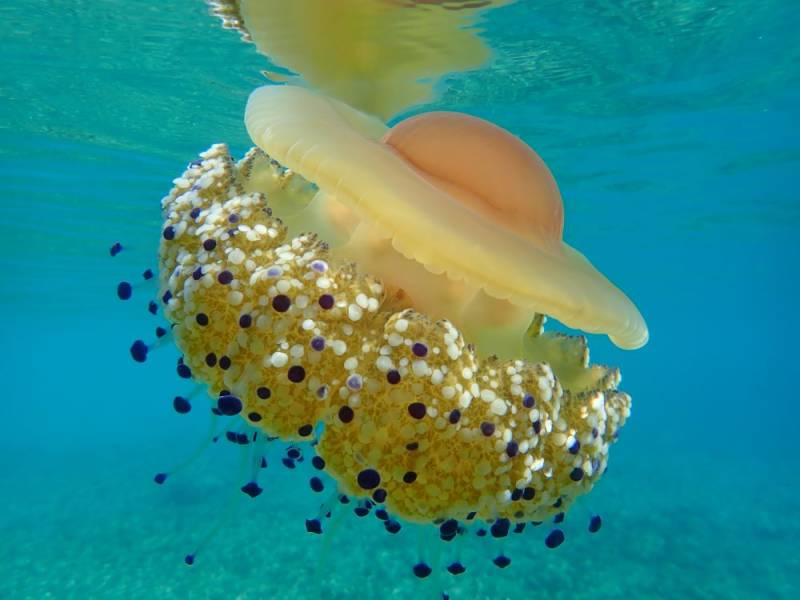







And cue the anti-jellyfish net debate. Every year, residents around the Mar Menor weigh in on whether these nets are a good idea. The jellyfish can be a bit off-putting when you are bathing in the lagoon, but the Mar Menor actually needs them. Jellyfish are an important part of the ecosystem and help keep the water balanced by feeding on plankton and other small organisms.
This summer, five beaches in the Mar Menor will have anti-jellyfish nets installed. The beaches are La Mota, Villananitos and La Puntica, all in San Pedro del Pinatar on the Mar Menor, and Veneziola and Pantalán in the La Manga area of San Javier. The Regional Ministry of the Environment has put out a tender for the placement and maintenance of the nets, covering 4.4 kilometres of coastline. The total budget for the project is €90,000.
Anti-jellyfish nets work by creating a barrier in the water that keeps jellyfish out of swimming areas while still allowing the water to flow. They help prevent problems caused by organic matter building up in areas where people swim. The nets were reintroduced in 2024 after a few years without them, and in the past two summers, the northern beaches of the lagoon have needed them because of a large number of Cotyloryza tuberculata, the jellyfish nicknamed the fried egg jellyfish.
The nets will only be put in places where they are needed most. The Ministry has permission to install them along 43 kilometres of Mar Menor beaches if necessary, and the authorisation runs until 2028. The nets will be in place from June to September, covering the full summer season, and will be replaced carefully to avoid any harm to seahorses and other local wildlife.
Image: Archive