























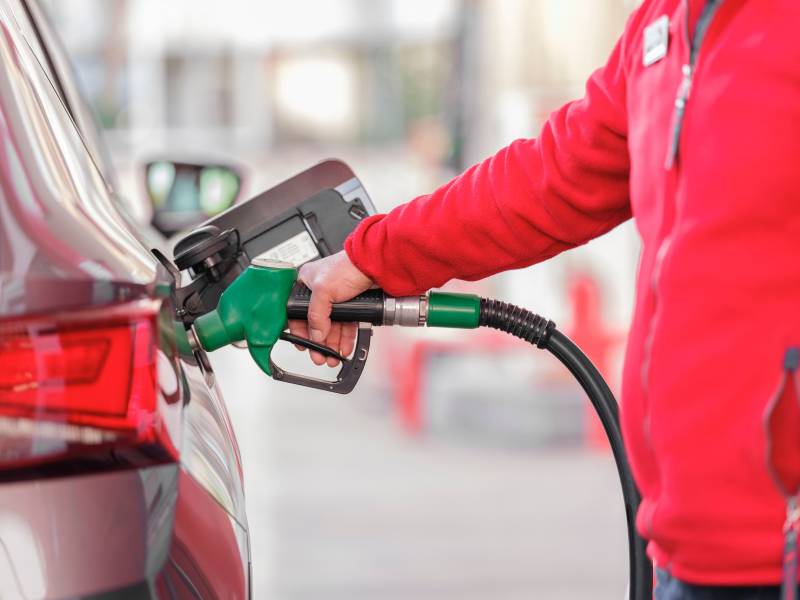
Rising fuel prices have pushed inflation in Spain to 4.9% in September, adding to the pressure on household budgets as the colder months approach. The latest figures also have implications for the Government's emergency measures, with support at the petrol station continuing.
The National Statistics Institute (INE) confirmed the September inflation figure on Wednesday October 14. Prices were 4.9% higher than a year earlier, while core inflation, which excludes energy and unprocessed food, rose to 3.1%.
The latest increase has been driven largely by the conflict in the Middle East and tensions around the Strait of Hormuz, a key route for international oil supplies. The resulting rise in oil and fuel prices has prompted the Government to maintain its support for motorists.
The cost of fuels and lubricants for vehicles has risen by more than 30% over the past year. Diesel prices were up 34%, while petrol rose by 27%, according to the INE.
That increase means the maximum tax reduction of 20 cents per litre will remain in place for both petrol and diesel in November. In December, the discount will be at least 13 cents per litre, preventing the support from falling as quickly as originally planned.
Professional transport operators will also receive additional assistance. Those eligible for a partial refund of diesel tax will receive support equivalent to 5 cents per litre in October, rising to 12 cents in November and 19 cents in December. Separate payments will help other passenger and goods transport businesses, while fuel support for the agricultural and fishing sectors has been extended until the end of the year.
The latest anti-crisis package was approved on September 29, although it still requires parliamentary confirmation.
Electricity prices also rose over the past year, increasing by 11.4% compared with September 2025. However, that is below the 15% threshold required to trigger the planned tax reductions in November.
The figures therefore suggest that the proposed cuts are unlikely to take effect next month. The measures would reduce VAT on electricity from 21% to 10% for eligible households and lower the Special Electricity Tax from 5.1% to 0.5%. The position could change for December, depending on how electricity prices move in October.
There is still some protection for households facing higher heating bills. The regulated natural gas tariff has a limit on how much the underlying gas cost can increase at its October review, while the price cap on butane gas cylinders remains in place. Eligible households will also continue to benefit from electricity social tariff discounts of between 25% and 40%.
Food and non-alcoholic drinks recorded annual inflation of 2.7% in September, a more moderate increase than fuel, although fresh produce remains a concern.
Berries have become almost 50% more expensive than a year ago, while tomatoes, peppers and cucumbers have risen by around 17%. Egg prices are also more than 12% higher.
The Ministry of Economy says the anti-crisis measures have absorbed close to half the inflationary impact of the conflict in Iran. However, the Bank of Spain estimates that the three packages of measures will cost public finances around €12 billion, equivalent to approximately half a percentage point of Spain's GDP.
Image: Pexels/Engin Akyurt
Sign up for the Spanish News Today Editors Roundup Weekly Bulletin and get an email with all the week’s news straight to your inbox
Special offer: Subscribe now for 25% off (36.95 euros for 48 Bulletins)
Read some of our recent bulletins:
Discount Special Offer subscription:
36.95€ for 48 Editor’s Weekly News Roundup bulletins!
Please CLICK THE BUTTON to subscribe.
(List price 3 months 12 Bulletins)